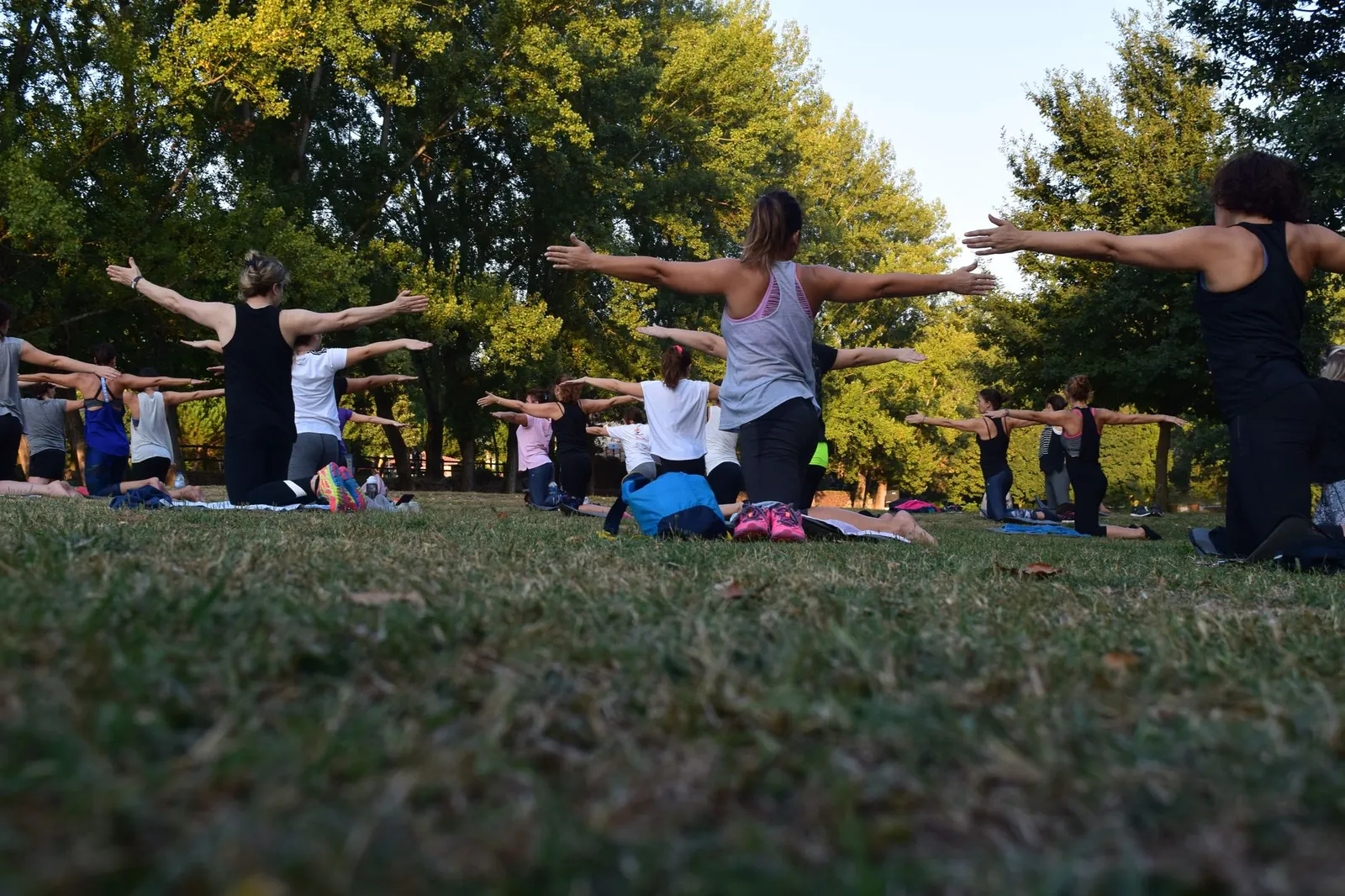
There's a moment near the end of almost every yoga class where the teacher dims the lights, asks everyone to close their eyes, and says something like, "Notice what you're feeling. You don't have to do anything with it." And every time, the room exhales. Not because the poses were hard or easy, but because someone finally gave us permission to stop performing.
That single instruction — you don't have to do anything with it — turns out to be a quiet rebellion against almost everything else in the fitness industry. Spin classes count your watts. Bootcamps shout at you to push harder. Wearables flash little celebratory animations when you close your ring. The implicit contract is: track, optimize, earn, repeat. Progress is the only thing that counts. Rest is what you earn after you've deserved it.
The yoga class, by contrast, treats your arrival as the whole assignment.
Here is what it gets right, and what the rest of the industry keeps missing.
It honors the beginner. No one in a yoga studio is being timed on their first Downward Dog. Teachers offer three versions of every shape, and the most common cue is "if this is too much, try this instead." Compare that to the average gym onboarding, which assumes you already know what a barbell is and rewards you for pretending you do. The cost of being new in most fitness spaces is shame. The cost in yoga is usually a block and a blanket.
It treats the body as a whole person. You don't go to yoga to fix a single muscle group. You go, and somehow your shoulders feel better and your sleep got deeper and you're a little less short with the people you love. The industry sells isolation — glute days, arm days, ab blasters — as if the body were a machine with parts. Yoga quietly insists that the parts don't mean anything without the breathing, the floor under you, the person you are when nobody is timing you.
It builds a room, not an audience. Studios are small, and teachers usually know your name after a few weeks. The relationship is the product. Most modern fitness is built for an anonymous crowd: massive rooms facing a stage, content that scales to millions of viewers, leaderboards that compare you to strangers. Community is a side effect at best, and loneliness is the more honest side effect.
It makes recovery the point. Savasana isn't a stretch you rush through at the end so you can get to the locker room. It is the reason you came. In a culture that treats rest as failure, the idea that the floor itself is the practice feels almost radical.
If you haven't been to a beginner-friendly class in Colorado Springs, you owe yourself one. Come as you are, wear whatever is comfortable, and plan to stay for the last ten minutes. The only thing we ask is the same thing the teacher will: show up, and let that be enough.
Reserve your spot at our next Intro to Yoga night. Mats are provided, the lights are warm, and no one is counting anything.