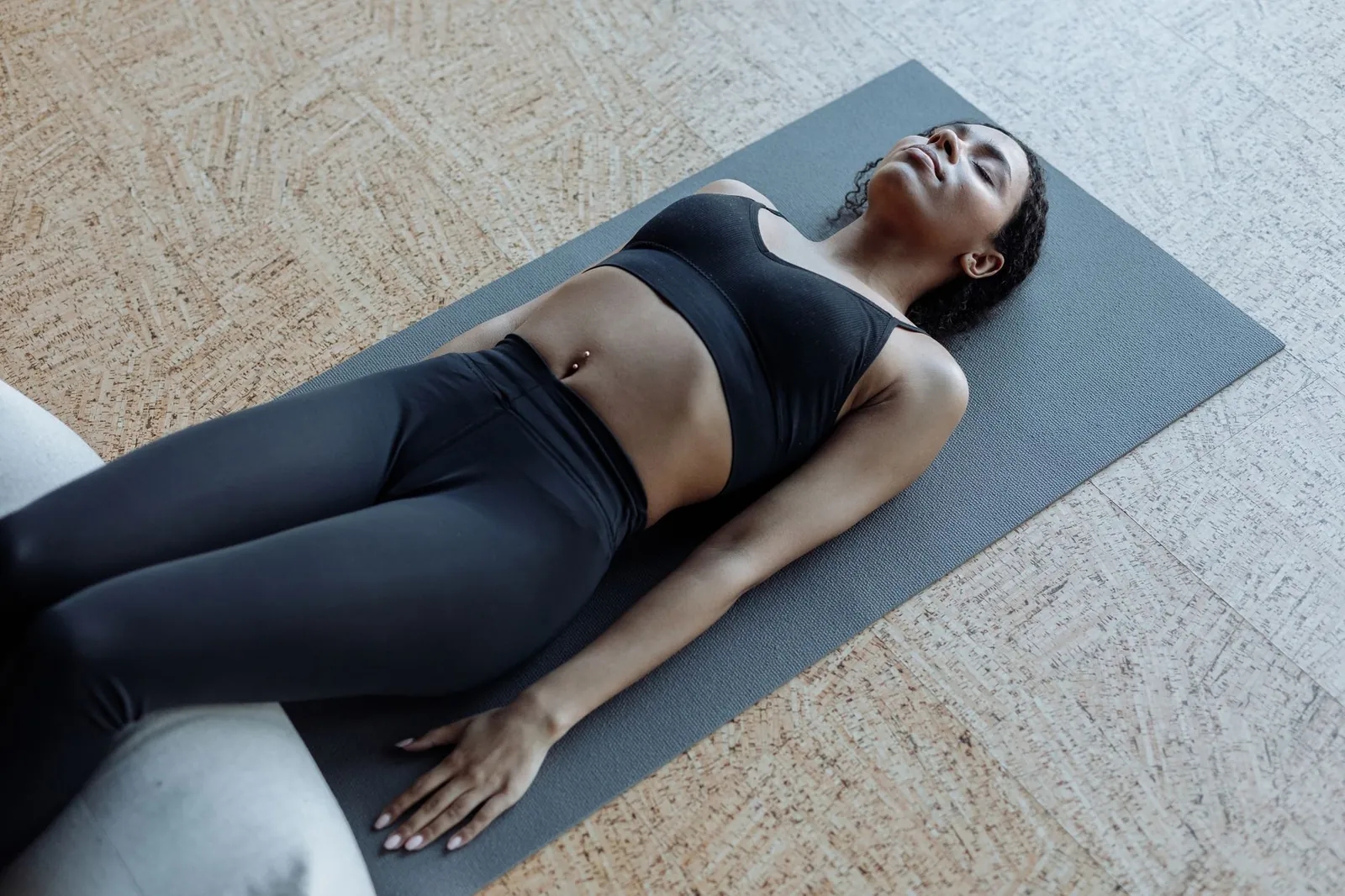
Yoga Nidra and Restorative Yoga can both bring a class to a quieter pace, but they ask students to rest in different ways. In Restorative Yoga, the body settles into supported shapes. In Yoga Nidra, students lie down and follow a guided practice of attention and relaxation. Choose based on the experience you want to offer, not on which name sounds more restful.
Restorative Yoga gives the body a shape to inhabit
A Restorative class centers on carefully supported poses. Use props to reduce effort, then let students remain in each shape for several minutes, often five to twenty. The aim is passive support rather than stretching deeply or working toward a demanding posture.
Plan transitions as carefully as the holds. Give students time to arrange blankets, bolsters, or blocks, and make adjustments before settling in. A few well-supported poses may serve the class better than a long sequence that leaves people repeatedly moving and resetting.
Yoga Nidra guides attention while the body rests
Yoga Nidra is generally practiced lying down, with a teacher guiding students through stages of attention and relaxation. The body stays still, but the practice has a clear listening component. That makes it different from a series of supported poses, even when both practices happen on the floor.
Consider whether your group would benefit from guided verbal instruction or from extended quiet in supported shapes. You can also plan a class around one approach and include a short, clearly introduced element of the other, rather than treating the terms as interchangeable.
Let the class goal guide the choice
For a session focused on settling into supported positions, choose Restorative Yoga. For a guided relaxation practice centered on attention, choose Yoga Nidra. If you are teaching a mixed-level group, explain what students will do before they lie down, offer options to change position, and avoid assuming everyone experiences stillness in the same way.
Neither practice requires a fixed sequence of poses. For Restorative Yoga, think about support, order, and how students will move between shapes. For Yoga Nidra, think about the arc of the guidance and how you will create a calm transition into and out of stillness.
Prepare a sequence that fits your teaching intention
Before class, write down the purpose of the session, the positions or stages you plan to include, and the transitions students will need. Green Yoga Inc.'s free online yoga sequence builder can help you map a sequence; it does not require an account. Optional paid AI teaching scripts are a separate purchase if you want help turning a sequence into teaching language. Start with the free builder at https://greenyogainc.com/yoga-poses/