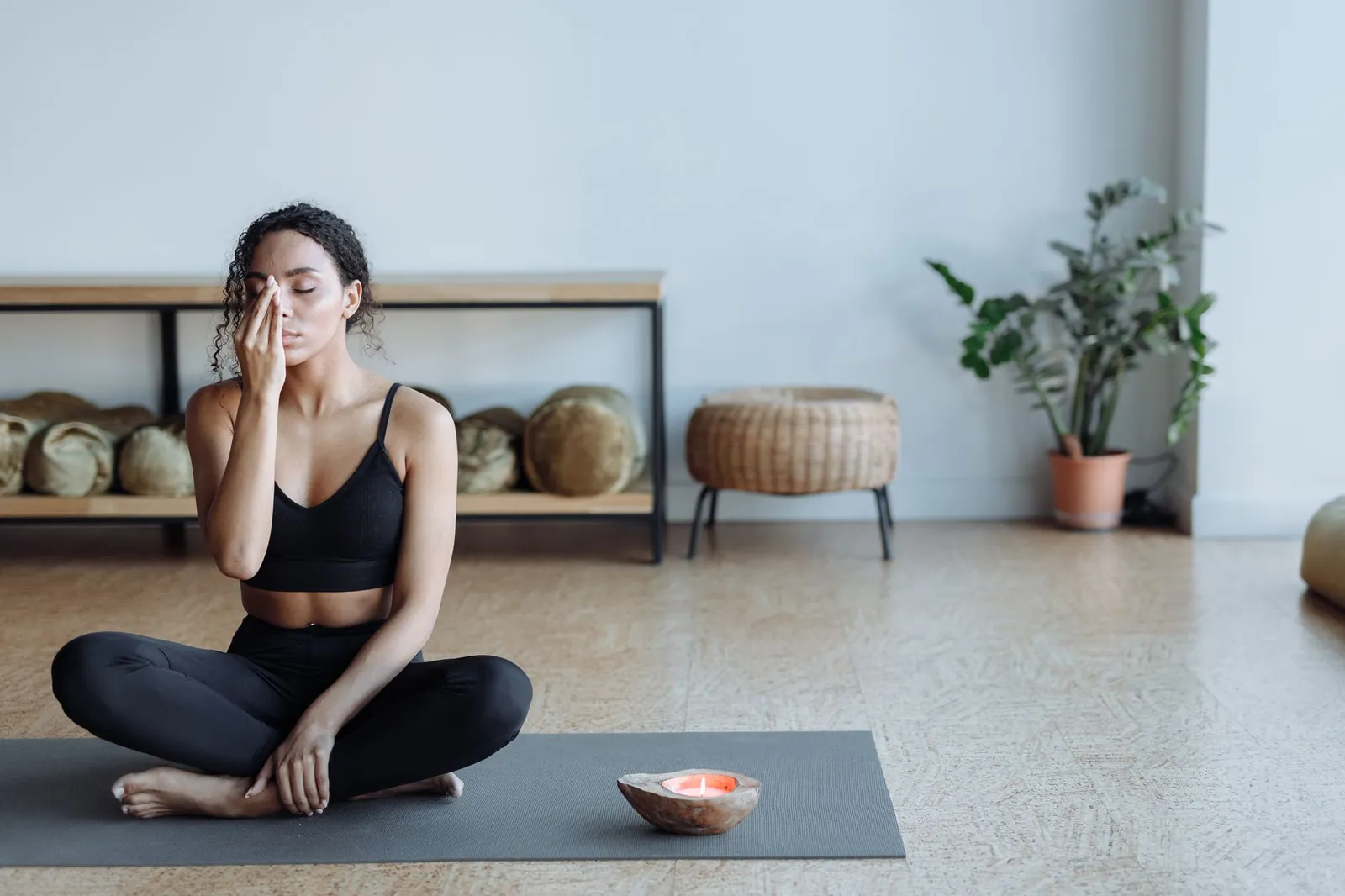
Stress can make the body feel like it is always bracing: shoulders lifted, jaw tight, breath shallow, thoughts moving faster than you can follow. Yoga offers a gentle way to interrupt that cycle. You do not need to be flexible, experienced, or perfectly calm to begin. With simple breathing, steady poses, and a few minutes of meditation, you can give your nervous system a clear signal: it is safe to soften.
Start with the breath
When anxiety rises, the breath often becomes quick and high in the chest. A simple practice is to place one hand on your belly and one hand on your heart, then breathe in through the nose for a count of four and out for a count of six. The longer exhale helps activate the parasympathetic nervous system, which supports rest and recovery. Try this for two to five minutes before a yoga practice, during a stressful workday, or before bed.
Use grounding poses to settle the body
Gentle, stable poses can help bring your attention out of racing thoughts and back into physical sensation. Child’s Pose, Cat-Cow, Forward Fold, and Legs Up the Wall are especially calming for many people. Move slowly and let the breath guide the pace. The goal is not to “perform” the pose, but to notice where the body can release a little. If you are practicing at home, use pillows, blankets, or a chair for support.
Add mindful movement
Stress often creates a feeling of stuck energy. A slow flow can help discharge tension without overstimulating the body. Try moving from Mountain Pose into a gentle Standing Forward Fold, then slowly rolling back up. Repeat several times while keeping the breath smooth. Sun Salutations can also be helpful when practiced at a slower pace. If anxiety is high, choose steady and simple over fast and intense.
Finish with meditation
Meditation does not mean emptying your mind. It means practicing how to return. Sit comfortably or lie down, close your eyes if that feels safe, and notice the breath. When thoughts appear, gently name them “thinking” and come back to the next inhale and exhale. Even three minutes can create a meaningful pause between stress and response.
Make it part of daily life
Yoga for stress works best when it becomes a small, repeatable habit. You might practice five minutes in the morning, stretch after work, or breathe slowly before sleep. Start with one breath, one pose, one quiet moment — and let that be enough today.