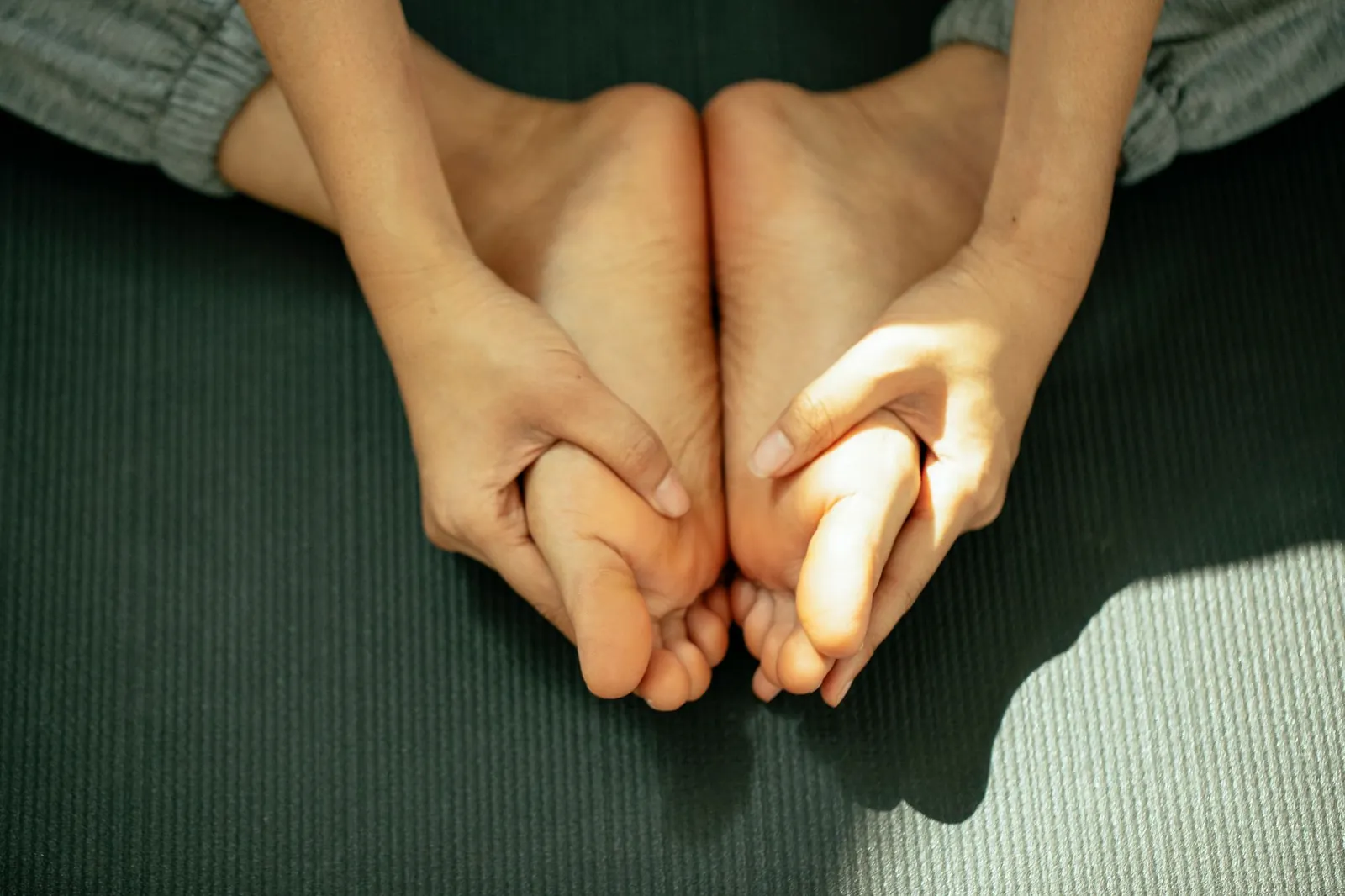
Some shapes ask you to perform. Reclining Bound Angle Pose asks you to stop. The soles of the feet come together, the knees fall open, and the back softens into the floor. For a few minutes the body stops bracing and the breath gets longer. That is the whole point of the practice.
A short home practice can feel scattered, especially on the days when the nervous system is loud. Reclining Bound Angle, known in Sanskrit as Supta Baddha Konasana, gives the sequence somewhere to land. It is gentle enough for a beginner, open enough for a tired body, and quiet enough to feel like a real pause rather than another task. Below is a simple way to set it up, settle into it, and use it as the soft heart of a brief practice.
Setting up so the body actually lets go
A few choices before you lie down change everything. Place a folded blanket lengthwise on your mat and sit at the front edge so the back of your head and the length of the spine can rest on it when you recline. Have two blocks or rolled towels nearby. If the knees float very high or the low back tightens, slide a block under each knee. The gesture of the pose is opening, not pulling. The prop does the work so the legs can stop gripping.
Let the arms rest wherever feels natural. Palms up on the belly is grounding. Arms long by the sides with palms up is restful. A small sandbag or folded towel across the tops of the feet adds a quiet weight that many people love. Once you settle, aim for the breath to soften before the timing begins. Five minutes is enough to feel a shift. Ten minutes is a small reset.
How to enter without clenching
Sit tall, bring the soles of the feet together, and let the knees open. Lean back onto your hands, then forearms, then slowly onto the back of the head. If the groins feel sharp, walk the feet a little farther from the pelvis. If the inner knees feel pinchy, bring the heels closer in. The shape should feel like an open book resting on the floor, not a book being held open.
When to use it in a short home practice
Try it as the second-to-last or final shape. A simple sequence is two or three rounds of Cat-Cow, a few cycles of low lunge on each side, a wide-legged Child's Pose, then Reclining Bound Angle for five to ten minutes. Finish with a brief seated silence or a short Savasana with a rolled blanket under the knees. The pose is a soft hinge between moving and resting, and the body learns to trust the transition.
Who should soften or skip it
If you are working with a knee injury, place more support under the knees and shorten the hold. During late pregnancy, elevate the upper back with a higher bolster so the chest is more open than the belly. If the pose simply does not feel right today, a simple seated forward fold with a blanket across the lap offers a similar feeling of inward quiet.
Try Reclining Bound Angle at the end of your own practice tonight, and notice how different it feels to end there instead of skipping straight to standing up.