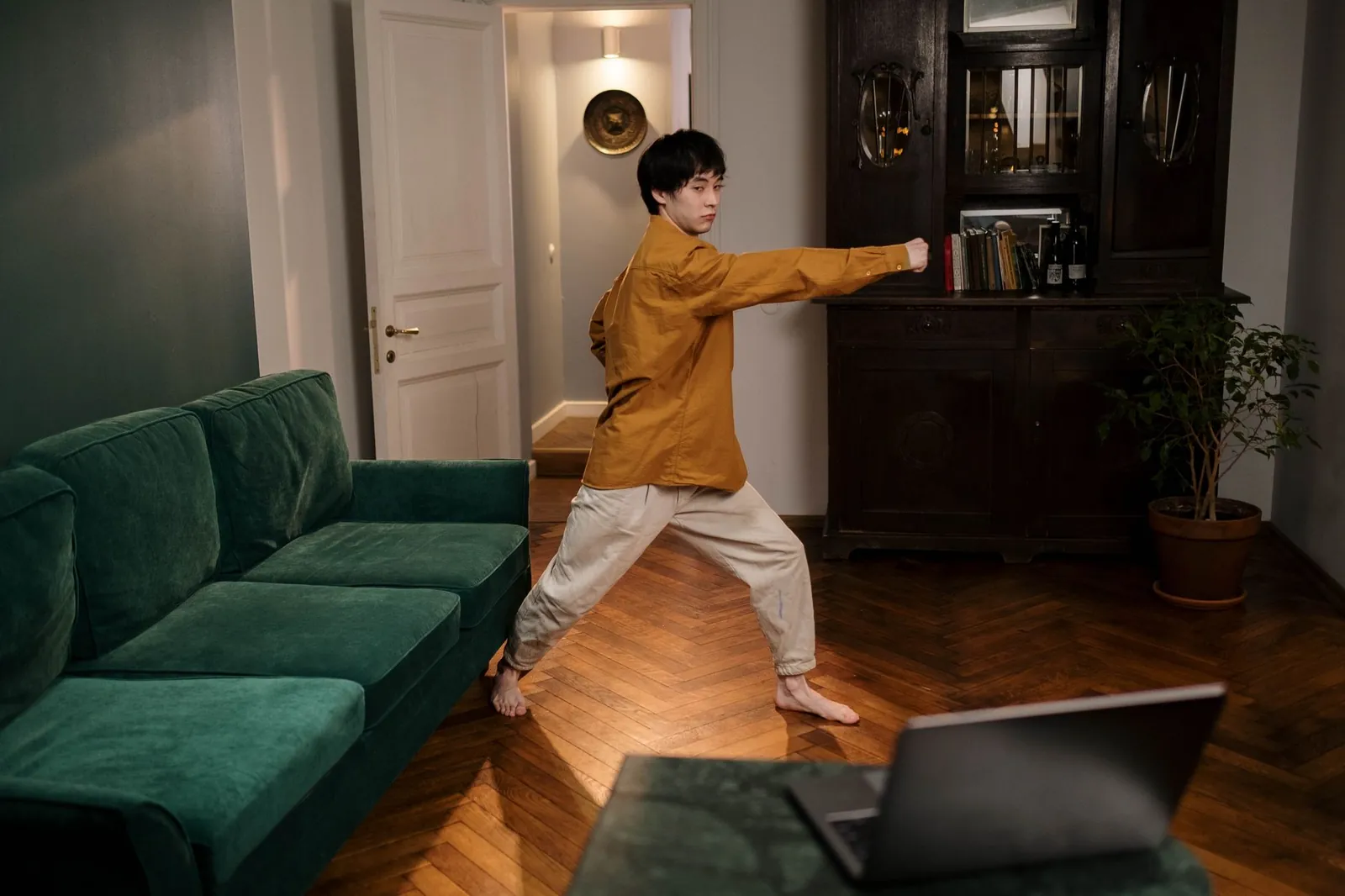
The local yoga teacher yawns halfway through her fifth Warrior sequence of the week and wonders if she's become a human Spotify playlist on repeat. The guilt is misplaced. Teaching the same yoga sequence every class is fine, and arguably better than the constant churn of novelty.
Repetition is how a body actually learns. Beginners may need repeated practice to become familiar with a new shape. A class that revisits the same standing sequence — Mountain, Forward Fold, Warrior I, Warrior II, Triangle — gives every student a known frame to anchor into. New cues land on top of a shape they already half-trust. Drop a Sun A and a Sun B into the warm-up and you've quietly built a syllabus without anyone noticing.
Camera-based yoga feedback offers another reason to revisit familiar poses: it gives a learner repeated opportunities to examine the same movement. When evaluating Zenia or another camera-based feedback tool, check which poses and comparisons it supports. Repeating a familiar pose is one teaching choice, not a universal prerequisite for tracking. Yogain advertises AI posture monitoring with monthly-equivalent prices in the ₹299–499 range depending on billing term; check its current plans before purchasing. Familiar sessions can give a learner something specific to revisit without making a changing sequence inherently ineffective.
In an app such as Daily Yoga, look for a session that fits what you want to practise, and decide whether repeating it is useful. A product's course structure alone does not prove a learning benefit. A teacher worried about being boring is overestimating how much novelty a class wants; a student who can stop thinking about which pose comes next has brain space left to actually feel Down Dog.
The teacher who varies the sequence week to week is often serving their own restlessness, not the room. They might fear the seasoned student who can lead the flow from memory. That student is the evidence the teaching is working. Better to let a few students yawn quietly at familiar cues than to hand them a sequence nobody can reproduce next Tuesday at home.
The real job in a recurring sequence is to keep noticing inside it. The shape is the same. The student on the mat is different every class, and so is the teacher, on a slightly different night of sleep.
For a starting outline, try the free Yoga Sequence Builder, review the generated poses, and adjust the order within stages. Keep your own record of a recurring class; the builder does not provide saved templates or a durable sequence library.