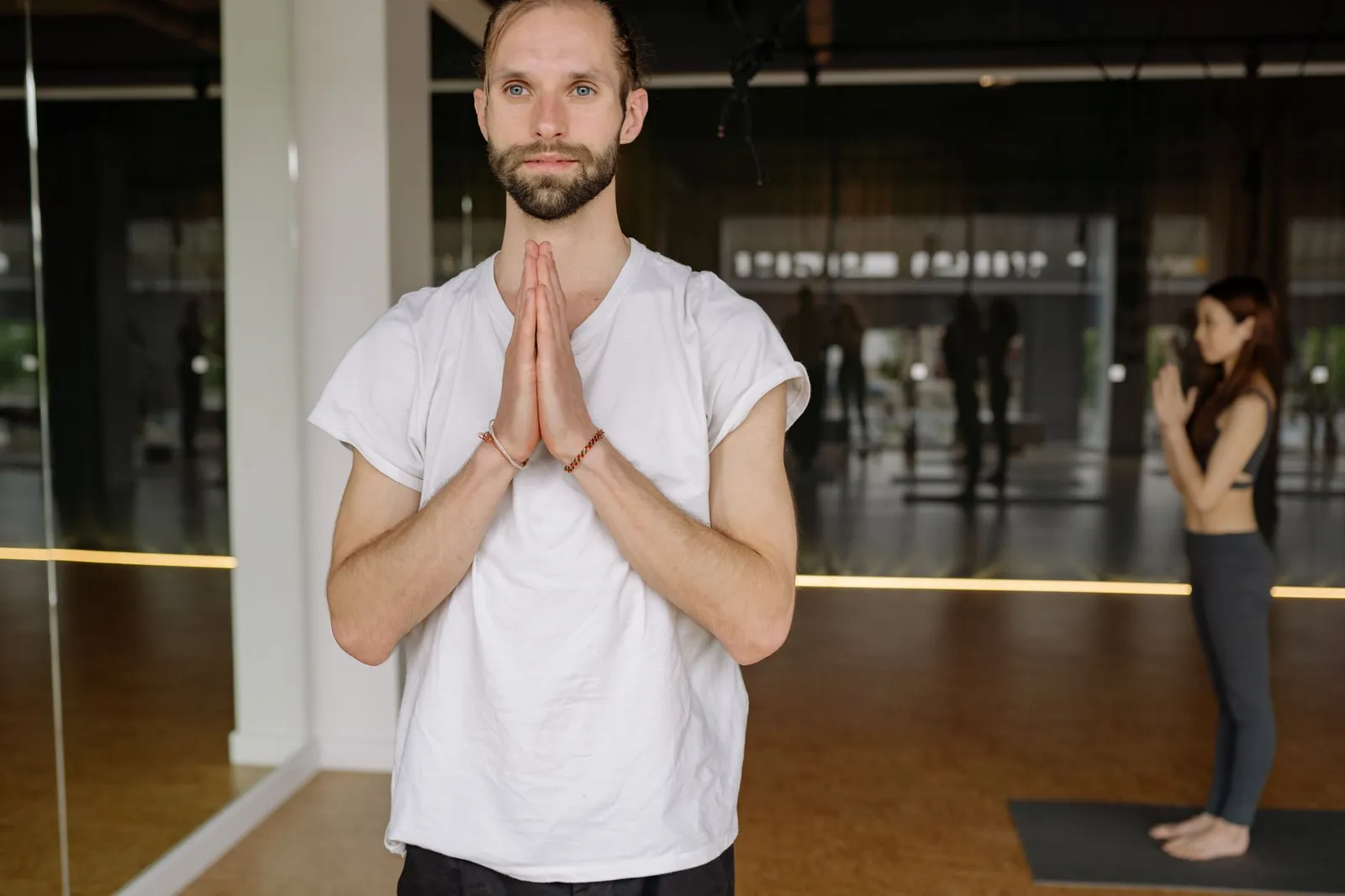
In a vinyasa class, the teacher almost never stops talking. An alignment cue, a breath count, a reminder about where to go next, then another one right after that. The room moves because the voice keeps moving ahead of it. Now picture a restorative class with the same teacher. She might speak for five minutes across the whole hour. That quiet is not a lack of skill. It is the job.
Different styles need different voices
Vinyasa runs on instruction. Students need to know what comes next and roughly how to get there, and the teacher's voice carries that. Yin and restorative run on something else. The teacher says just enough to get you into the shape, then offers options for props and adjustments, and lets the posture do its work. Same teacher, same hour, two very different uses of the voice.
More talking can hide less attention
Words are a cover. When a teacher narrates every transition, a beginner has something to listen to besides their own body, and that feels calmer. Constant narration can also make it easier to miss a change in someone’s breathing or signs that a movement is uncomfortable. Less narration leaves a gap where attention used to be, and that gap is exactly where the listening goes.
The mechanics do not need a human voice
Alignment details are the sort of thing a tool can hand you. Some digital tools provide alignment instructions or interactive feedback. Check the tool’s capabilities and privacy policy before using it. That changes what a teacher spends words on. The mechanical parts, knees tracking over ankles, weight moving forward, hand position, are the ones a screen can illustrate. The words worth spending are the ones that depend on the person in front of you: whether this person's breath has gone shallow, whether the shape suits their body on this particular day, whether the effort should come down a notch.
Practicing quiet at home
You can train this on your own. Build the sequence ahead of time so you are not narrating it live. Choose a familiar posture you can hold comfortably, pause without cues, and notice how your attention changes. Adapt the position or use support when you need it. Sit quietly at the end and count how many times you reach for your phone.
The free online yoga sequence builder at https://greenyogainc.com/yoga-poses/ lets you plan the shape of a practice before you step onto the mat, so you can spend your attention on the practice instead of the planning. If you want to train the quiet part specifically, the meditation guide at https://greenyogainc.com/meditation/ is a good place to start. New issues are published on the website each month at https://greenyogainc.com/newsletters/, and there is no email list to join.