Stress can make even simple things feel heavy: your shoulders creep up, your breath gets shallow, and your mind keeps replaying the day long after it’s over. Yoga offers a gentle way to come back to yourself—without needing to be flexible, experienced, or “good” at it. For beginners, a few steady breaths and simple poses can create a meaningful shift in how the body feels and how the mind responds.
Start with your breath
Before moving into any pose, begin by noticing your breathing. Stress often pulls us into quick, shallow breaths, which can keep the nervous system on high alert. Try sitting comfortably, placing one hand on your belly, and breathing in slowly through your nose. Let the exhale be a little longer than the inhale.
This simple practice tells the body, “I’m safe right now.” Even two minutes can help soften tension and create space between you and your thoughts. If you’re new to yoga, breath awareness is one of the most powerful places to start.
Choose grounding poses
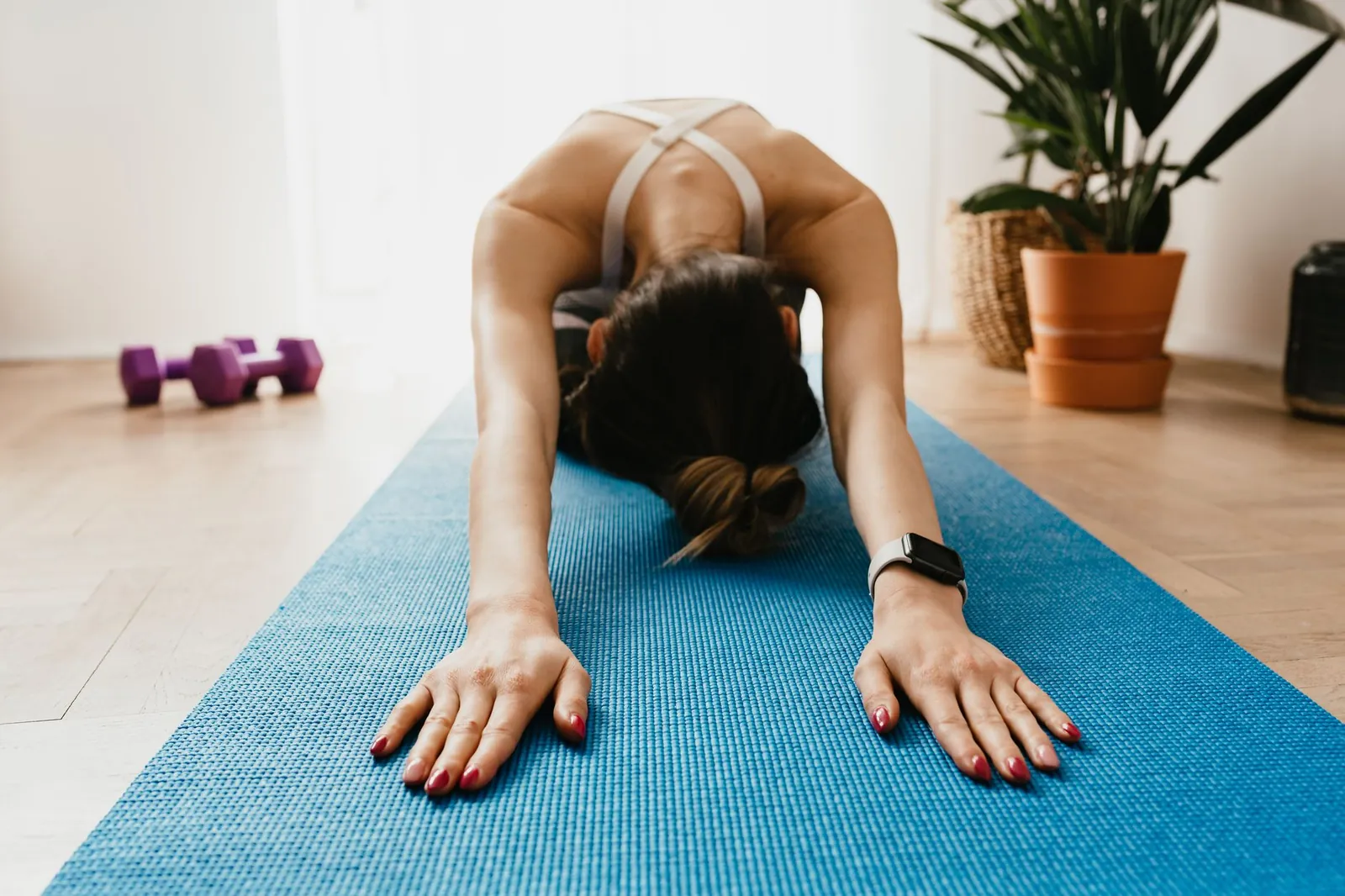
Beginner-friendly poses like Child’s Pose, Cat-Cow, Mountain Pose, and Legs Up the Wall are wonderful for stress relief because they are simple, steady, and easy to modify. You don’t need to push or perform. The goal is to feel supported.
Child’s Pose can help release the back and hips. Cat-Cow gently moves the spine and encourages rhythmic breathing. Mountain Pose teaches you to feel your feet on the ground, which can be especially calming when your mind feels scattered.
Move slowly and with kindness
Stress often makes us rush, even when we’re trying to relax. In beginner yoga, slower is usually better. Give yourself permission to move gently, pause often, and notice what your body is telling you.
A helpful approach is to ask, “Can I do 10% less?” This keeps the practice sustainable and reduces the urge to force a stretch. Yoga for stress relief is not about achieving a shape—it’s about building a kinder relationship with your body.
Create a simple routine
A short, consistent practice can be more helpful than a long session you rarely do. Try five to ten minutes in the morning, after work, or before bed. You might begin with three deep breaths, move through Cat-Cow, rest in Child’s Pose, and finish with Legs Up the Wall.
If you live in Colorado Springs, your practice can also connect with the rhythms of the place around you: a quiet morning, mountain air, or a calm evening after a busy day. Let your yoga feel local, personal, and real.
If stress has been building, start small today. Roll out a mat, sit on a blanket, or simply take three slow breaths where you are. And if you’d like guidance, consider joining a beginner-friendly yoga class where you can learn in a welcoming community and build a stress-relief practice that truly fits your life.